Your Questions About In-Home ABA Therapy in Hudson County, Answered by a Local BCBA
When parents in Hudson County reach out to us for the first time, they usually have a lot of questions. That's a good thing. Choosing an ABA provider is one of the most important decisions you'll make for your child, and you should feel informed before committing to anyone — including us.
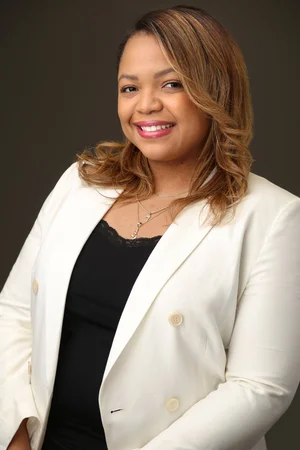
I'm Jennifer Lopez, a Board Certified Behavior Analyst and the founder of Lopez and Associates Behavior Consulting. Over the years, I've heard many of the same questions come up again and again from families in Jersey City, Hoboken, Bayonne, and across Hudson County. So I decided to put the answers in one place.
This isn't a sales pitch. It's the same conversation I'd have with you on the phone. If something here raises more questions, reach out — we're always happy to talk.
What exactly is in-home ABA therapy, and how is it different from going to a center?
In-home ABA therapy means a trained therapist comes to your home to work directly with your child. ABA, Applied Behavior Analysis, is a research-backed approach that helps children with autism build communication, social, and daily living skills while reducing behaviors that get in the way of learning and family life.
The key difference from center-based therapy is context. When your child practices brushing teeth in your actual bathroom, or learns to ask for a snack in your actual kitchen, those skills transfer to real life much more reliably than skills taught in a clinical room with different furniture, different lighting, and different people. We call this Natural Environment Training, and it's the foundation of how we work.
For Hudson County families specifically, in-home therapy also eliminates a major logistical headache. If you're living in a walkup in Hoboken or a high-rise in Jersey City, the last thing you need after a long day is to load your child into the car and fight traffic to a center. We come to you, and we work around your schedule.
“If you're living in a walkup in Hoboken or a high-rise in Jersey City, the last thing you need after a long day is to load your child into the car and fight traffic to a center. We come to you, and we work around your schedule.”
How do I know if my child actually needs ABA therapy?
This is one of the most common questions I hear, and it's an important one. ABA therapy is specifically designed for children with an autism spectrum disorder diagnosis. If your child has received a diagnosis from a developmental pediatrician, neurologist, or psychologist, ABA is likely one of the recommended interventions.
That said, ABA isn't a one-size-fits-all answer for every child with autism. The number of hours, the specific goals, and the approach should all be tailored to your child's individual needs. Some children benefit from intensive services (20-30+ hours per week), while others do well with a more focused program targeting specific skills. That's something we determine together during the assessment process.
If you're unsure whether ABA is the right fit, I'd encourage you to schedule a consultation. There's no commitment involved — it's just a conversation where we can learn about your child and help you think through your options.
What should I look for in a quality ABA provider?
I tell every parent the same thing: pay less attention to what an agency says on their website and more attention to how they treat you from the first phone call.
The providers who deliver the best outcomes are the ones who slow down before they start. They want to understand your child as a person — their strengths, their interests, what motivates them — before they write a single goal. They ask about your family's values, your daily routines, what's working and what isn't. They don't hand you a binder of generic goals and tell you to sign.
From a clinical standpoint, the most important thing is active BCBA involvement. The BCBA is the person who designs your child's treatment plan, trains the therapist, and makes sure the program is actually working. At some agencies, the BCBA creates the initial plan and then disappears — maybe checking in remotely once a month. At our practice, I believe supervision has to be hands-on and in your home. The BCBA needs to see how sessions are actually going, not just review data on a spreadsheet.
The other thing I always emphasize is parent coaching. You are with your child far more hours than any therapist will ever be. If the agency isn't teaching you strategies you can use between sessions — if they're treating you like a spectator rather than a partner — that's a problem. The families who see the most lasting progress are the ones where parents feel confident and equipped, not dependent on the therapist being there.
And here's something specific to Hudson County: ask whether the agency can actually staff your case consistently. A national chain might accept your referral but then take months to find a therapist willing to commute to your neighborhood and deal with parking. Because we're locally focused, we know the geography. We staff accordingly, and we don't accept cases we can't serve reliably.
What are the red flags I should watch out for?
After years in this field, I've seen the full range of how agencies operate. Here are the warning signs I'd tell any parent to take seriously:
Vague answers about BCBA supervision. If they can't tell you exactly how often a BCBA will observe sessions in your home, that's a problem. "As needed" is not an answer.
Pressure to commit before your questions are answered. A quality agency will welcome your questions, not rush past them.
A one-size-fits-all treatment approach. If the goals on your child's plan look like they could belong to any child, the plan wasn't individualized.
Reluctance to involve you as a parent. If you're being told to stay in another room during sessions or you're not offered regular parent coaching, the agency isn't set up for long-term success.
High therapist turnover or constant schedule changes. Consistency matters enormously for children with autism. If the agency can't keep staff, your child pays the price.
No emphasis on your child's willingness to participate. Modern, ethical ABA is built around "assent" — your child should be an engaged, willing participant. If a provider talks mostly about compliance and behavior reduction rather than building skills and motivation, question their approach.
Promises that sound too good to be true. No ethical provider guarantees specific outcomes, and any agency claiming zero waitlist when everyone else has months-long waits deserves skepticism.
Trust your instincts. If something feels off during the intake process, it's okay to keep looking.
How does insurance work for ABA therapy in New Jersey?
The good news is that New Jersey has strong autism insurance laws. Most major commercial insurance plans — including Horizon Blue Cross Blue Shield, Aetna, UnitedHealthcare, and Cigna — are required to cover ABA therapy for children with an autism diagnosis. NJ FamilyCare (Medicaid) also covers ABA services.
The frustrating part is that coverage details vary by plan. The number of hours authorized, whether you need prior authorization, your copay or deductible — all of that depends on your specific policy.
Here's what I recommend: don't try to navigate this alone. A good ABA provider will handle the insurance verification and authorization process for you. At our practice, we collect your insurance information upfront, verify your benefits, and begin the authorization request on your behalf. You'll know what's covered before services start. That's one of the most important behind-the-scenes steps we handle, and it's something every agency should be doing for families.
If you want to check things yourself first, call the member services number on the back of your card and ask specifically about coverage for "Applied Behavior Analysis for autism spectrum disorder." Ask whether prior authorization is required and what your out-of-pocket costs would be. Write down the reference number and the name of the representative — you'll want that documentation.
What's the deal with waitlists? How long will it take to start?
I'll be honest with you: waitlists are a reality in Hudson County. Demand for in-home ABA is high, and most agencies — including ours at times — have more families seeking services than available therapists. Wait times can range from a few weeks to several months depending on the agency, your neighborhood, and how many hours your child needs.
My advice is to get on the list early, even if you're still deciding between providers. Be upfront with agencies about the fact that you're exploring multiple options — that's completely normal and no one should make you feel bad about it.
While you're waiting, there are productive things you can do. Gather your child's most recent evaluations and school reports so they're ready when the intake process begins. Ask the agency whether they offer initial parent coaching sessions before full therapy hours are available — we do, and it can make a meaningful difference even before a therapist is assigned. And use the time to prepare your home if needed, whether that means identifying a good space for sessions or simply thinking about which daily routines you'd most want support with.
Once you're off the waitlist, the process moves through intake paperwork, insurance authorization, a comprehensive assessment by a BCBA in your home, and then therapist matching and scheduling. From first contact to the start of regular sessions, expect the full process to take a few weeks to a couple of months.
What does the actual therapy process look like once we start?
At our practice, it works like this. First, we have a conversation — no formal assessment, just a chance to learn about your child and what you're hoping for. If we're the right fit, we move into the intake process where we gather your documentation and handle insurance authorization.
Once approved, a BCBA conducts a comprehensive assessment in your home. This is where we really get to know your child — their communication skills, how they play, their daily routines, what's challenging and what's going well. We also do a Functional Behavior Assessment to understand why challenging behaviors are happening, not just what they look like on the surface. From that data, we build a treatment plan with clear, measurable goals that reflect your family's actual priorities.
Then we match your child with a Behavior Technician whose personality and energy complement your child's, and sessions begin. During sessions, the therapist engages your child through play-based learning and structured activities. The BCBA provides regular in-home supervision and meets with you for parent coaching. We review data continuously, and your child's plan evolves as they grow and master new skills.
The goal isn't to have your child in therapy forever. It's to build skills, build your confidence as a parent, and work toward the point where your family has the tools to thrive independently.
Why does LABC focus specifically on Hudson County?
Because this is our community. I founded Lopez and Associates to provide the kind of care that I saw families in this area struggling to find — personalized, values-based, and actually delivered by people who know the neighborhoods they're working in.
We know what it's like to find parking in the Heights. We understand the school systems in different parts of the county. We know that a family in a Jersey City high-rise has different spatial realities than a family in a Bayonne row home, and we adapt accordingly. When a national agency assigns a therapist who's never been to Hudson County and gives them a two-hour commute, that therapist cancels more often, shows up stressed, and eventually leaves. That's not good for your child.
We also understand the cultural diversity of this area. Hudson County is one of the most diverse places in the country, and that matters for therapy. When we work with a bilingual family or a household where grandparents are primary caregivers, we adjust our approach — the communication strategies, the way we involve family members, the goals we prioritize. A therapy plan that ignores the reality of how your household operates isn't going to produce lasting results.
I still have questions. How do I reach you?
That's what we're here for. Whether you're ready to start the process or just want to talk through your options, we welcome the conversation. There's no pressure and no obligation.
REQUEST A CONSULT

Author: Jennifer Lopez, BCBA, Founder of Lopez and Associates Behavior Consulting